01 / Reliability
It Keeps Going When Others Quit
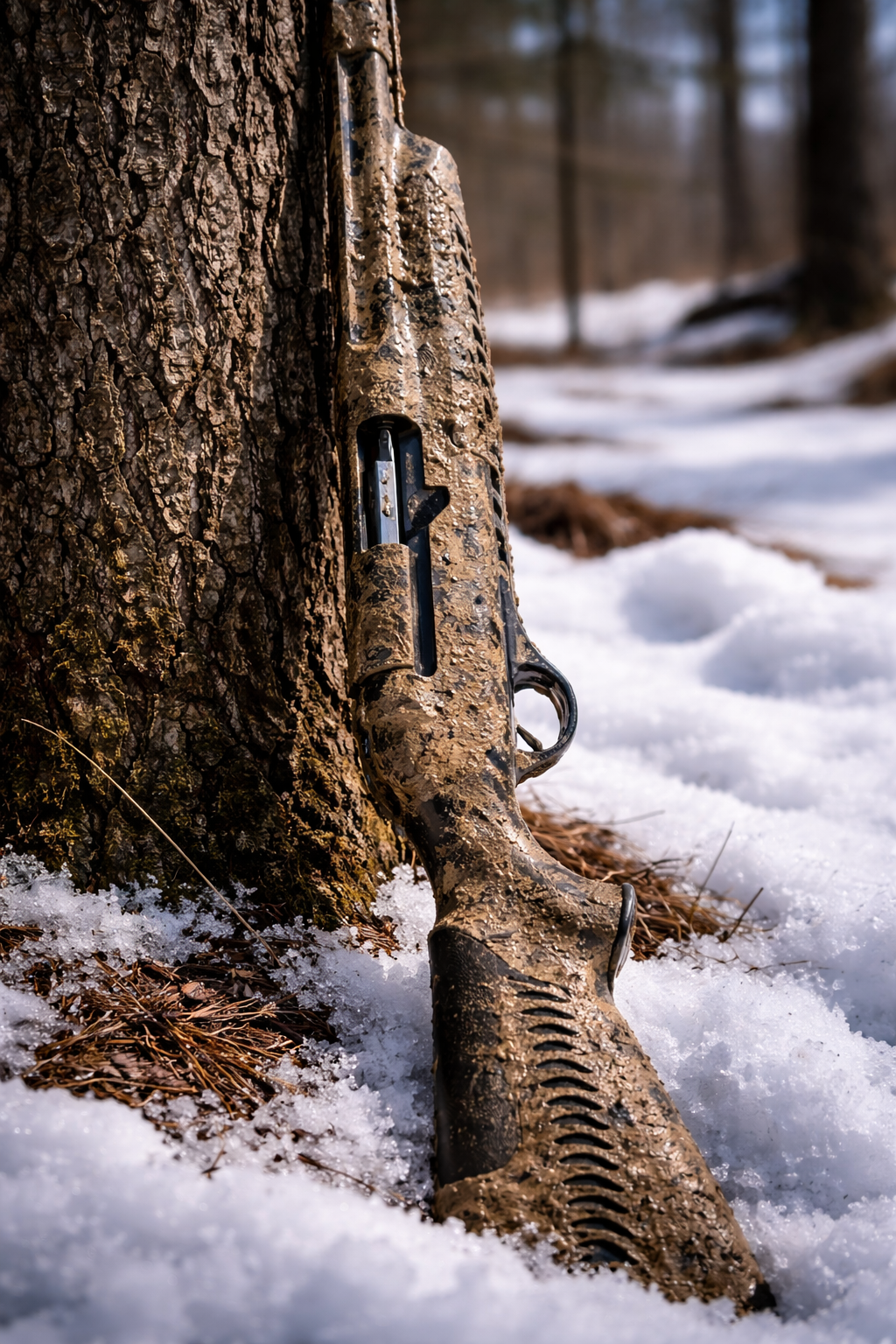
Mud-caked. Ice-cold. Hard handled. The inertia system's mechanical simplicity is a genuine advantage in the field — fewer parts to foul, faster to rinse and run.


The Benelli Super Black Eagle 3 has a reputation that precedes it into every blind, boat, and flooded field in North America. It did not build that reputation with marketing language — it built it by working when conditions were at their worst.
We've put the SBE3 through its paces across multiple seasons — freezing blinds, muddy boat rides, and mornings where conditions separate the reliable guns from the ones that let you down.
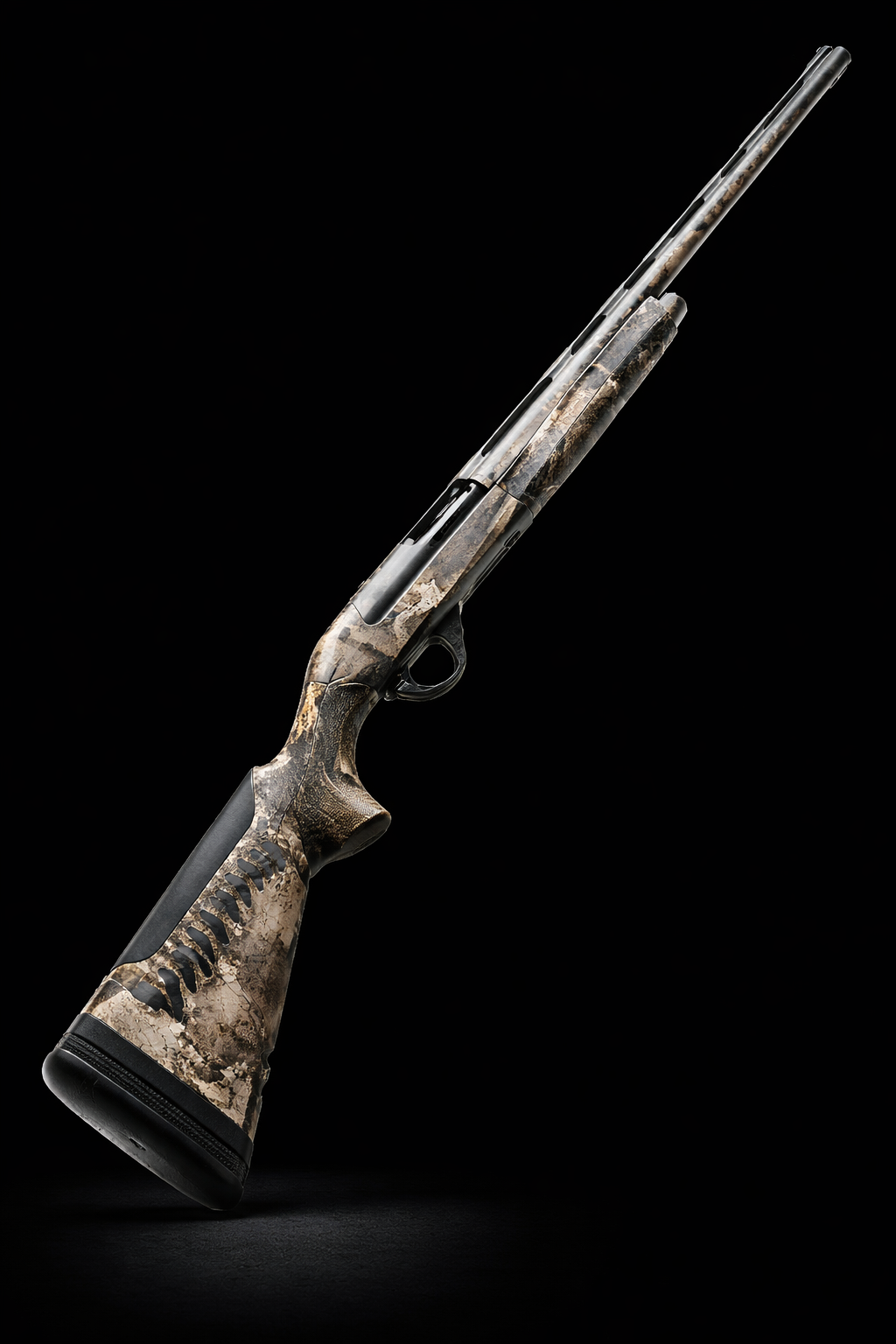
Before you read the full breakdown — watch us put the SBE3 through its paces in the field.
The SBE3 is not a Swiss Army knife. It is not the cheapest semi-auto on the rack, it is not ideal for grinding through clay course after clay course, and it is not the first gun we would reach for on a home defense shelf. What it is — consistently, across cold mornings and ugly conditions — is a waterfowl shotgun that does exactly what you bought it for.
The same strengths kept coming up in every session: a reliability story that holds under mud and cold, fast breakdown and cleanup, a swing and balance that feel natural the moment the gun hits your shoulder, and a fit system that actually lets you tune it properly.
Mud-caked. Ice-cold. Hard handled. The inertia system's mechanical simplicity is a genuine advantage in the field — fewer parts to foul, faster to rinse and run.

Grip geometry, fore-end feel, rearward balance — most shooters connect with a Benelli almost immediately. That first shoulder mount tends to feel right in a way that is hard to put into words.

The SBE3 is not trying to be everything. Its design center is birds in the air and shells in the chamber — and that focused intent shows in how it performs when shooting actually matters.
When the birds are working and it is fifteen degrees, the only question that matters is whether the gun fires, cycles, and gets back on target without drama. The SBE3 has a thirty-year track record of answering yes.
— Pyrost Field Review Summary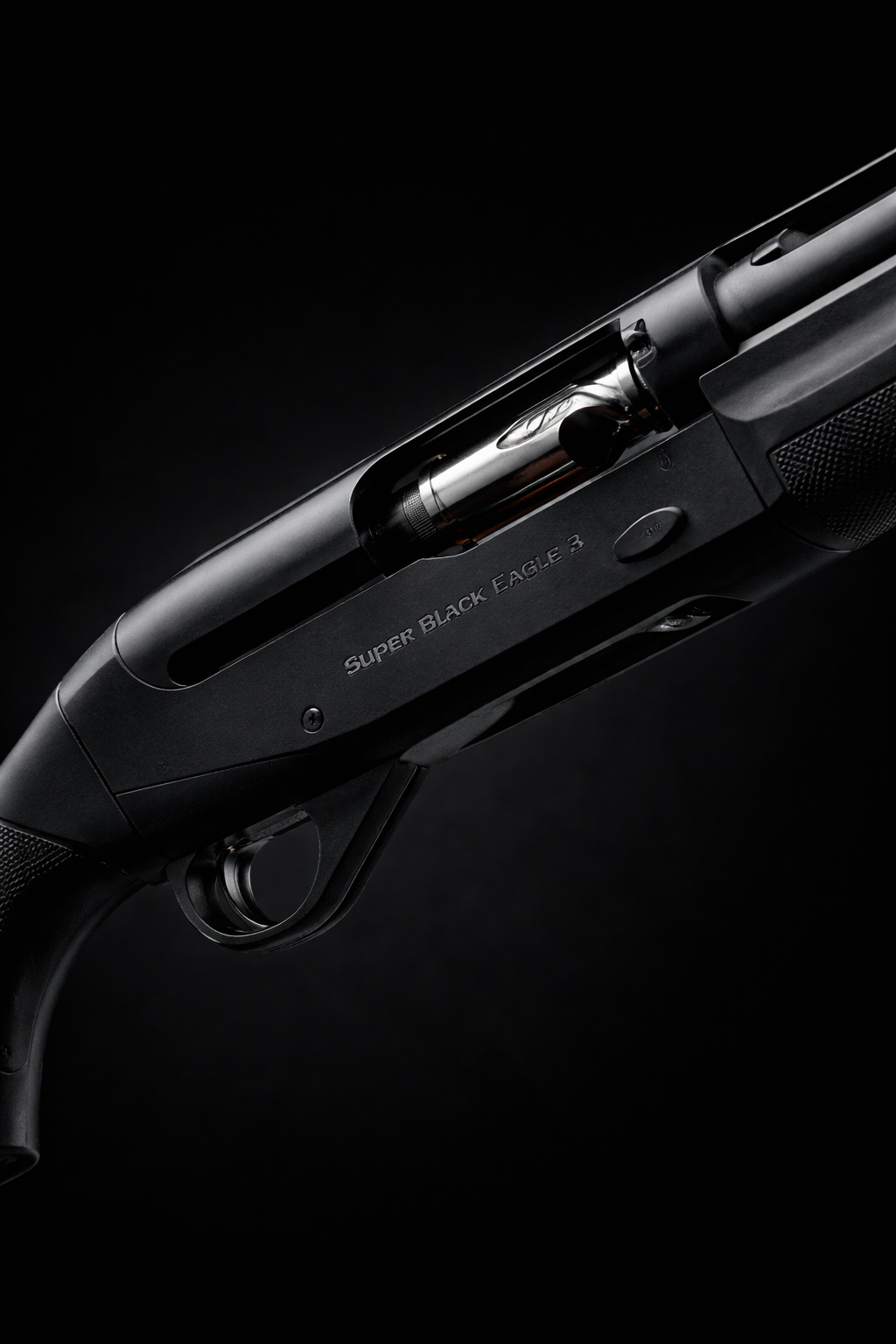


Everything else about this shotgun matters less than this: when the conditions get ugly and the clock is running, the SBE3 fires. That sounds like a low bar until you have spent a morning in a frozen layout blind watching a gas gun cough and stutter. The inertia system's mechanical simplicity — fewer moving parts, no gas ports to clog, no pistons to foul — is the reason Benelli's reputation persists across three generations of this platform.
The grip geometry and fore-end are part of why shooters bond with Benellis fast. But what separates the SBE3 from older inertia guns is a proper fit system: adjustable shims at the receiver, interchangeable comb inserts, and length-of-pull spacers. Point of impact, cast, and drop can all be tuned — and that matters far more to shooting consistency than most of the other spec sheet details people agonize over.
Strip out the bolt, wipe down the receiver, run a brush through the barrel — the SBE3 comes apart intuitively and goes back together the same way. One reviewer clocked a full field strip and reassembly in under ten minutes without looking at the manual. After a wet, muddy late-season hunt, that kind of simplicity is not a minor convenience. It is the difference between a gun that is ready tomorrow and one that is not.
Benelli's ComforTech stock system uses a series of gel inserts and a flexible comb to manage recoil impulse before it reaches your cheek and shoulder. Three-inch and three-and-a-half-inch steel loads still have authority, but they do not punish. Over a long day of pass-shooting or a multi-hunt season, that difference accumulates in ways your body will appreciate.
We liked this gun. A lot. But liking something doesn't mean ignoring its rough edges — and the SBE3 has a few that are worth calling out honestly.
None of them change the core recommendation for the right buyer. But knowing them upfront sets the right expectations and helps you decide whether this is actually your gun or whether something else fits better.
You are spending real money here — $1,700 to $2,200 depending on the finish. The SBE3 earns it, but it is not the budget play in any realistic sense, and there are strong competitors at lower price points.
Compared with a gas-operated competitor like the Beretta A400, the recoil impulse feels sharper and the muzzle moves more. Not violent — but noticeable, especially on a long session. Gas guns feel flatter to many shooters.
Light two-and-three-quarter-inch target ammunition and the SBE3 do not have a great relationship. It cycles them, mostly — but this gun is happiest with full-power loads, which is exactly what it was built for.
Most negative first impressions of the SBE3 come from the loading sequence. It is not difficult — but it is not the same as a pump gun or other semi-auto layouts, and fighting it rather than learning it is how you end up confused in a blind at shooting time. Spend twenty minutes dry-cycling it before the season and it becomes second nature.
Start with the action open and the safety engaged. Know where the bolt release and loading gate are before you need them in the dark.
Drop the first shell through the ejection port to chamber it, then hit the bolt release firmly. No halfhearted presses — commit to it.
Top off through the loading port. Once you own the sequence it is fast and repeatable — the kind of thing your hands can do before your brain wakes up at 4 a.m.
If you spend more than ten minutes researching the SBE3, you will end up in the Benelli-versus-Beretta conversation. It is worth having honestly. These are two different philosophies, not two versions of the same gun. The right answer is the one that mounts naturally, swings instinctively, and patterns where you look — for you, with your dimensions, on your bird.
The SBE3 is focused. It is not the go-to home defense shotgun. It is not a tactical choice. It is not the right gun for someone burning through five hundred clay targets a day on a budget. That focus is not a weakness — it is the reason the gun is good at what it does.
If you are buying a duck and goose gun that will spend seasons in a boat, a blind, and a gun bag without requiring constant babysitting — the SBE3 deserves a serious look. If your priorities are elsewhere, there are better choices for less money.



The SBE3 scores well because it was designed for one purpose and executes it at a high level. The value score is not low because it is a bad gun — it is a reflection of a genuine premium price in a competitive category. Everything else reflects a platform that has spent three generations getting refined.
If you want a light, weather-ready, premium semi-auto with a proven record in real hunting conditions, the Benelli SBE3 is easy to recommend without reservation. If maximum softness or lowest price point are your top priorities, there may be better fits — but for the hunter who wants a gun that simply works, season after season, the SBE3 sets the standard.